Cybersecurity Corner | Deepfake Sweethearts: Don't Let a Bot Break Your Heart
Blog Author: Dan Tinsley
February 23, 2026

 765-289-2141 $$ 3700 W Bethel Ave Muncie IN 47304 US
.png)
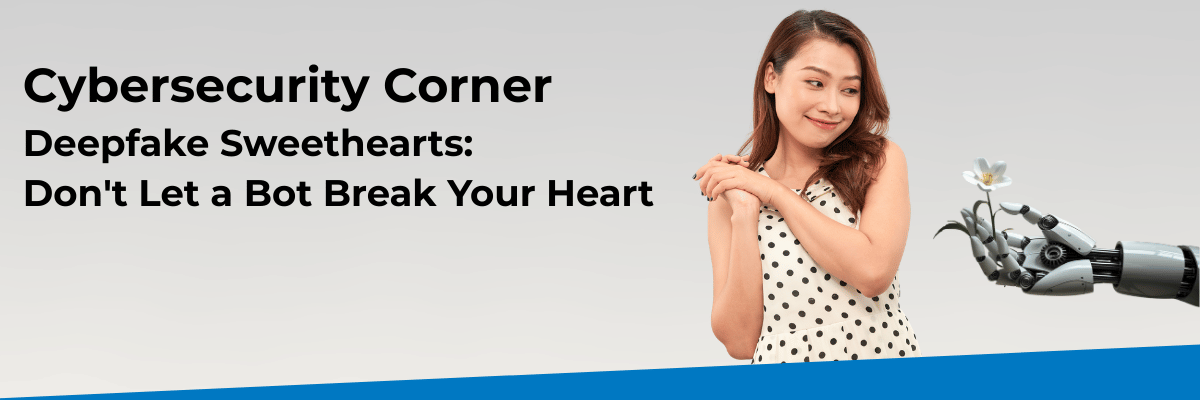
February is usually a month of candy hearts and bouquets, but at PrimeTrust, we’re keeping a close eye on a darker trend that is breaking more than just hearts. As we move deeper into the 2020s, the "Catfish" of yesterday has evolved into something far more dangerous: the AI-generated scammer. In the past, you could often spot a romance scammer by their grainy photos, poor grammar, or refusal to hop on a video call. But today, Artificial Intelligence has handed fraudsters a "digital mask." Using high-end "Deepfake" technology, scammers can now create lifelike avatars that look, move, and speak just like a real person. They aren't just stealing your photos; they are stealing your trust.
The traditional romance scam involved a fraudster using a stolen photo of a soldier or a model to lure victims into a long-distance emotional connection. Once the victim was "hooked," a tragedy would strike—a medical emergency, a legal bill, or a broken plane ticket—and the victim would be asked to send money.
With Deepfakes, the scam is much more intimate. A scammer can now use AI to generate a voice that sounds warm and local. They can participate in a video call where their face is mapped over a real person's movements, making it look like you are truly chatting with the person in the profile picture. For many, seeing a face and hearing a voice is the ultimate "proof" of legitimacy. Scammers are banking on that trust.
While AI is getting better, it isn't perfect. There are still "glitches" that can give a bot away if you know where to look:
Today’s scammers are patient. They might talk to you for months without asking for a dime. They want to become a part of your daily routine. They send "good morning" texts and "goodnight" voice notes. This is known as "grooming."
The goal is to reach a level of intimacy where, when the "ask" finally comes, your first instinct is to help a friend rather than protect your finances. They may even suggest "investing" together in a new cryptocurrency platform—this is a hybrid scam called "Pig Butchering," where they fatten up the victim's trust before taking everything.
At PrimeTrust Federal Credit Union, we see the aftermath of these scams. It’s not just the financial loss; it’s the emotional betrayal. To protect yourself, follow these non-negotiables:
Love should be life-changing, but it shouldn't be bank-breaking. If you ever feel pressured to send money or share your PrimeTrust login credentials with a "sweetheart," stop and call us first. We are here to be your protective partner. We are here to be your protective partner, if you assume it’s a scam don’t hesitate to give PrimeTrust a call.
About PrimeTrust Federal Credit Union
PrimeTrust Federal Credit Union’s mission is to provide financial advantage to members in a way that promotes their overall quality of life. PrimeTrust is a not-for-profit financial cooperative owned and governed by members. Deposits are used to provide loans to other members, and excess profits are reinvested in better-rates and low- and no-fee services. At PrimeTrust, stories matter. Stories like yours. You have goals for your family and your future, goals that deserve a financial provider who knows more about you than just your credit score. That’s exactly the kind of personal attention you’ll receive at PrimeTrust. As a National Credit Union Administration (NCUA) community-charted credit union, PrimeTrust is able to provide membership to any business or person who lives, works, worships, or goes to school in Delaware, Madison, Henry, Hamilton, and Hancock counties.